SPUUR Directors

Chad Vezina, PhD
Professor and Chairman of Comparative Biosciences, University of Wisconsin School of Veterinary Medicine
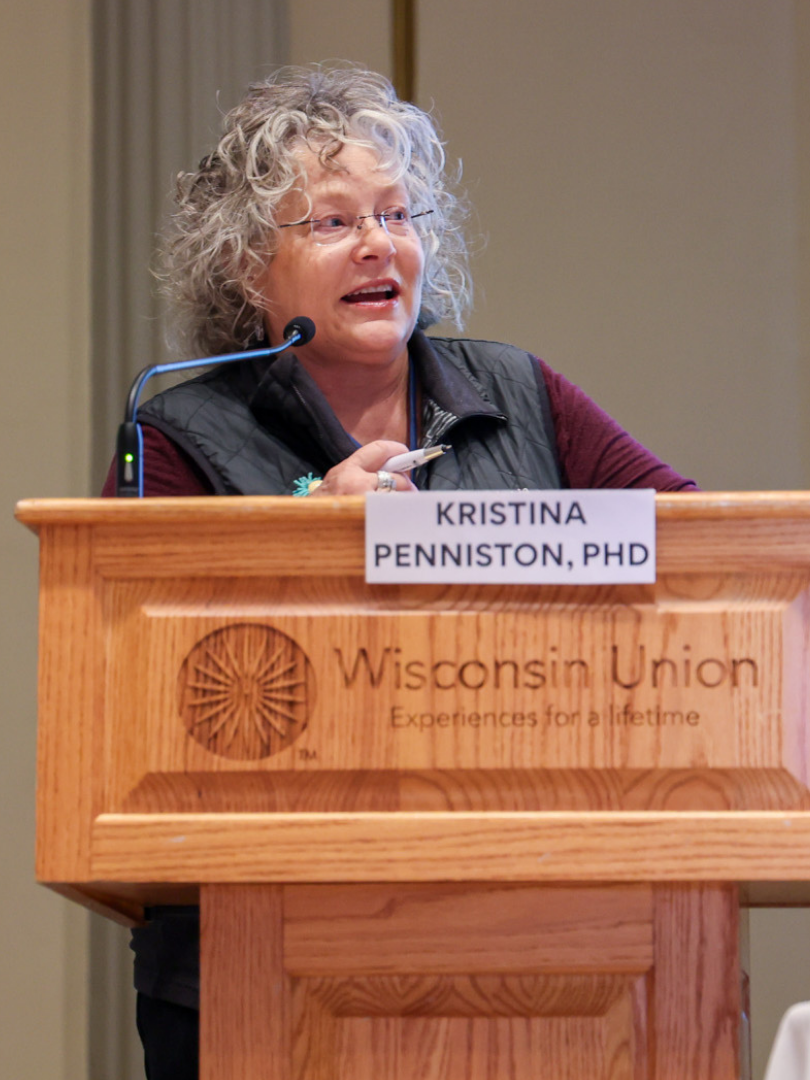
Kristina Penniston, PhD, RDN
Distinguished Senior Scientist, Department of Urology, University of Wisconsin School of Medicine and Public Health
SPUUR Faculty Mentors
Below is a list of potential faculty mentors; note that not all mentors are available each summer. Additional mentors may be added each summer.
SPUUR Director
Kristina Penniston, PhD, RDN
Distinguished Senior Scientist, Department of Urology, University of Wisconsin School of Medicine and Public Health
Dr. Penniston is a distinguished scientist in the Department of Urology. Additionally, she holds a position as a registered dietitian nutritionist at UW Health where she provides medical nutrition therapy to patients with urologic disorders. Her research has focused primarily on kidney stone pathophysiology, for which she developed a porcine model of calcium oxalate stone disease, and on prevention of stone recurrence with nutrition. In 2018, she was appointed by NIDDK Program Officers to the position of Director of Interactions for a multi-center academic research community known as CAIRIBU (Collaborating for the Advancement of Interdisciplinary Research in Benign Urology). In 2020, Dr. Penniston received NIDDK funding to continue this work in the form of the U24 Urology Interactions Core (DK127726), for which she is the PI, and also a competitive renewal in 2025.
SPUUR Director
Chad Vezina, PhD
Professor and Chairman of Comparative Biosciences, University of Wisconsin School of Veterinary Medicine
Dr. Vezina, now department chair of Comparative Biosciences in the University of Wisconsin School of Veterinary Medicine, is focused on mechanisms of lower urinary development, function, and dysfunction. His current research interests include the roles of developmental signaling pathways, epigenetics, and early life chemical exposures on prostate health and benign urinary function. He has directed prior summer research programs for undergraduates and is also the director of the UW–Madison K12 Multidisciplinary Urologic Research Career Development Program
SPUUR Faculty mentor
Joan Neuner, MD, MPH
Division of General Internal Medicine, School of Medicine and Public Health
In addition to her role as a physician, Dr. Neuner is also the Associate Chief of Research for UW SMPH General Internal Medicine. Dr. Neuner is a health services research expert who has a long record of federally-funded research. Her research program is primarily aimed at improving health delivery and decision-making in women’s health, particularly around long-term medication use, and also improving nonsurgical urinary incontinence care across Wisconsin. Dr. Neuner uses methods including informatics, patient and provider surveys, and machine learning in her program of health services and health delivery research.
SPUUR Faculty mentor
Lauren Baker, MS, DVM, PhD
Department of Animal and Dairy Sciences, College of Letters & Science, University of Wisconsin–Madison, prior UW–Madison K12 scholar).
Dr. Baker has advanced training in bioinformatics from the University of Wisconsin Computation and Informatics in Biology and Medicine postdoctoral training program. Her research utilizes companion dogs as a naturally occurring model of calcium oxalate kidney stones and other complex heritable disorders. She uses a variety of bioinformatic approaches to integrate clinical data with genomics with other ‘omics data types to define clinical and molecular subtypes of disease that drive risk factors for stone development (e.g. hypercalciuria).
SPUUR Faculty mentor
LaTasha Crawford, VMD, PhD
Department of Pathobiological Sciences, School of Veterinary Medicine, prior UW–Madison K12 scholar
Dr. Crawford is an early-stage investigator and clinician scientist using a combination of genetic, molecular, behavioral, and neurophysiological techniques to explore cell-specific neural mechanisms of bladder pain caused by cystitis. She and her team use an interdisciplinary approach combined with technical expertise in neurophysiology, behavioral neuroscience, and veterinary pathology. She is also engaged in collaborative translational research projects in the fields of pain, peripheral neuropathy, and urologic disease.
SPUUR Faculty mentor
Johanna Hannan, PhD
Department of Urology, School of Medicine and Public Health
Dr. Hannan is an Associate Professor in the Department of Urology. Her work explores the vascular systems in the lower urinary tract (bladder, erectile tissue, and other pelvic structures) and how they are affected by disease, aging, and cancer treatments. Currently, Dr. Hannan and her team are investigating the long-term impact of radiation therapy on pelvic and prostate cancer survivors, as well as similar effects in women’s health.
SPUUR Faculty mentor
Vinaya Bhatia, MD
Assistant Professor and Director of Medical Education, Department of Urology, Division of Pediatric Urology, School of Medicine and Public Health, and current UW–Madison K12 scholar
Dr. Bhatia’s research focuses on quality of life and improving standards of care in hypospadias, pediatric congenital conditions, and neonatal circumcision. She is currently working on developing a measure of quality of life for patients with hypospadias, to improve psychosocial and psychosexual outcomes in youth and adults who have been treated for hypospadias.
SPUUR Faculty mentor
William Ricke, PhD
Department of Urology, School of Medicine and Public Health
Dr. Ricke is a Professor in the Department of Urology. His research is in cellular and molecular mechanisms of lower urinary tract dysfunction. Current projects examine the role of estrogen regulation in inflammation and fibrosis, address mechanisms of castration resistance, and seek molecular mechanisms of mitochondrial dysfunction in aging. He Directs the Urologic Research, Director of the UW–Madison O’Brien center of research excellence in benign urology.
SPUUR Faculty mentor
Alejandro Roldán-Alzate, PhD
Departments of Mechanical Engineering and Radiology, prior UW–Madison K12 scholar
Dr. Roldán-Alzate is focused on fluid mechanics analysis of the lower urinary tract using MRI and computational modeling. His current research interests include the non-invasive analysis of bladder and prostate in patients with benign prostatic hyperplasia and lower urinary tract symptoms using MRI technology.
SPUUR Faculty mentor
Diego Hernando, PhD
Departments of Radiology and Medical Physics, School of Medicine and Public Health, prior UW–Madison K12 scholar
Dr. Hernando is focused on the development and translational validation of novel imaging techniques, with a particular emphasis on transforming Magnetic Resonance Imaging into a quantitative imaging modality. His current research interests include the quantification of fat and iron deposition, as well as fibrosis.
SPUUR Faculty mentor
Kimberly Keil Stietz, PhD
Department of Comparative Biosciences, School of Veterinary Medicine
Dr. Keil is an Assistant Professor. She is focused on the impact and mechanisms of developmental exposures to environmental chemicals on lower urinary tract development and function. Her current research includes investigating effects of polychlorinated biphenyls on voiding function. Her research involves in vitro and in vivo mouse models to investigate bladder morphology and function.
SPUUR Faculty mentor
Fei Zhao, PhD
Department of Comparative Biosciences, School of Veterinary Medicine
Dr. Zhao studies cellular and molecular mechanisms underlying sexual differentiation of reproductive tracts using transgenic and conditional knockout mouse models, ex vivo organ culture, gene/protein expression analyses, genomic, and single-cell technologies.